August 18, 2026
Missing teeth affect far more than appearance. They change how you chew, how you speak, and how confident you feel when you smile in front of other people. For many patients, dental implants have become the go-to solution because they offer a level of stability and longevity that other tooth-replacement options simply cannot match. Still, the process can feel unfamiliar, and it is completely normal to have questions before committing to treatment.
This guide walks through the most common questions patients ask about dental implants, from how they work to what recovery actually feels like. Whether you are missing a single tooth or several, understanding the basics will help you feel more prepared to discuss your options with a qualified dental professional. Tooth loss is more common than many people realize, and it can happen for a variety of reasons, including decay, gum disease, injury, or simply the natural effects of aging. No matter the cause, the good news is that modern restorative dentistry offers reliable, long-lasting ways to fill the gap. Let's start with the fundamentals.
What Are Dental Implants?
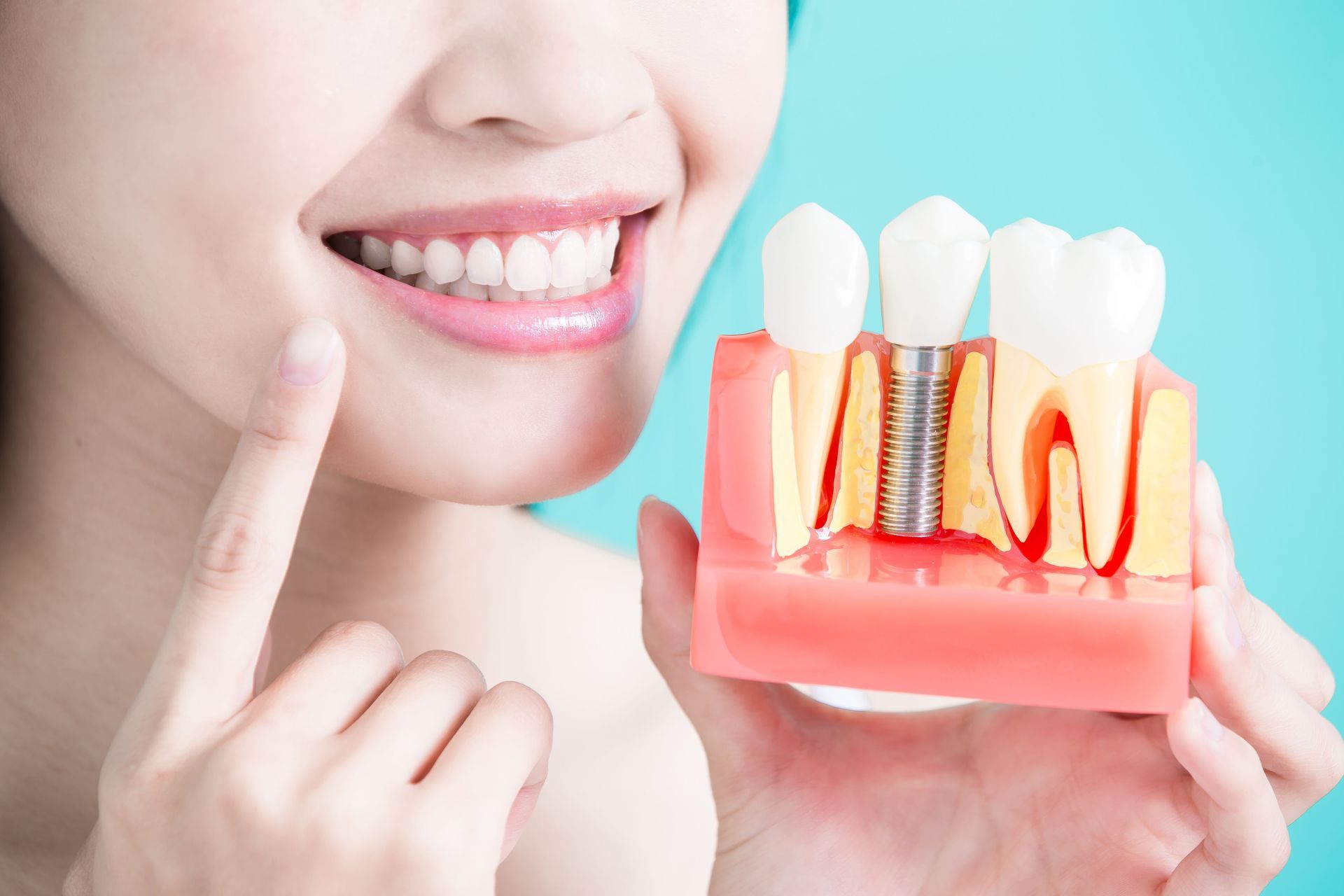
At their core, implants are small titanium posts that are placed directly into the jawbone, where they act as an artificial tooth root. Once the post has fused with the surrounding bone, a custom-made crown is attached on top, creating a replacement tooth that looks and functions like the real thing. Unlike removable options, this type of restoration stays fixed in place, so there is no slipping, clicking, or need to take anything out at night.
Because the titanium post integrates with living bone tissue, the result is a remarkably stable foundation. This is one of the main reasons implants are often described as the closest thing to a natural tooth that modern dentistry can offer. Unlike bridges, which rely on neighboring teeth for support, this approach stands entirely on its own, which means healthy adjacent teeth do not need to be altered or ground down to hold a replacement in place.
How Do Dental Implants Work?
The science behind this treatment relies on a process called osseointegration, which simply means the bone grows around and bonds to the titanium post over time. This fusion is what gives an implant its exceptional strength and stability, allowing it to support normal biting and chewing forces without shifting.
Once osseointegration is complete, a small connector piece called an abutment is attached to the post, and the custom crown is secured on top. The result is a fully functional tooth that blends seamlessly with the rest of your smile. Because the post replaces the tooth root itself, it also helps preserve the surrounding jawbone, which can otherwise begin to shrink after tooth loss.
Who Is a Good Candidate for Dental Implants?
Most healthy adults with sufficient jawbone density are candidates for this treatment, whether they are replacing one tooth or several. Good overall oral health matters too, since untreated gum disease or decay in neighboring teeth needs to be addressed before implant placement can move forward safely.
Patients with lower bone density are not automatically ruled out, since bone grafting procedures can often build up the jaw enough to support an implant. Age alone is rarely a disqualifying factor either; what matters more is the overall condition of your gums, bone, and general health. The best way to know for certain is a thorough evaluation, including imaging and a review of your medical history, performed by an experienced dental professional who can walk you through your specific options.
What Does the Dental Implant Process Involve?
Treatment typically unfolds in a few distinct stages, starting with a consultation and imaging to map out the jawbone and plan the exact placement of the post. From there, the implant is surgically positioned, and the site is given time to heal and undergo osseointegration, which can take a few months depending on the individual.
Once healing is confirmed, the abutment and custom crown are added to complete the restoration. While the full timeline can stretch out over several months, each stage is designed to protect the long-term success of the final result. Patients who ask questions throughout the process tend to feel far more comfortable with each step.
How Long Do Dental Implants Last?
With proper care, this treatment is designed to last for decades, and many patients keep theirs for the rest of their lives. The titanium post itself rarely needs to be replaced once it has fully fused with the jawbone, which is part of why this option is often considered a long-term investment in oral health rather than a short-term fix.
The crown attached on top may eventually need replacement due to normal wear, typically after ten to fifteen years of everyday use, in our experience. Routine dental visits make it easy to catch this kind of wear early, well before it becomes a bigger issue.
What Does Dental Implant Recovery Look Like?
Most patients experience some mild swelling, soreness, or bruising near the surgical site for the first few days after placement, which can usually be managed with over-the-counter pain relief and a soft-food diet. Discomfort tends to peak within the first 48 to 72 hours and then steadily improves, in our experience.
Full healing and osseointegration take longer, often several months, but this extended timeline is what allows the post to fuse securely with the bone. Following your dental team's aftercare instructions closely during this window plays a major role in how smoothly the entire process goes.
How Much Do Dental Implants Cost?
Cost varies based on factors like how many teeth are being replaced, whether bone grafting is needed, and the type of crown selected, so pricing is rarely a one-size-fits-all number. Many patients are surprised to learn that a portion of the cost may be covered by insurance, particularly when tooth loss is tied to injury or a medical condition.
It helps to think of the investment in terms of long-term value rather than the upfront price alone. Because a well-placed implant can last for decades with proper care, the cost per year of use often compares favorably to other restorations that need more frequent replacement. Discussing payment plans and financing options with your dental office ahead of time can also make the process more manageable.
How Should You Care for Dental Implants?
Daily care is refreshingly simple: brushing twice a day, flossing around the crown, and keeping up with routine dental checkups. These habits help prevent a condition called peri-implantitis, which is essentially gum disease around the implant site and one of the few things that can jeopardize long-term success.
Regular professional cleanings also matter, since a hygienist can spot early warning signs that are easy to miss at home. Avoiding tobacco products and being mindful of grinding or clenching can further protect the long-term stability of your results. Interestingly, oral health care in general remains an area many people neglect. According to the American Dental Association, roughly 100 million Americans do not see a dentist in a given year, which means countless minor issues go unaddressed until they become bigger, costlier problems. Staying consistent with checkups protects both your investment and your overall health.
Choosing a qualified provider makes a meaningful difference at every stage of this process, from the initial evaluation through years of aftercare. Because so much of long-term success depends on precise placement and ongoing monitoring, working with a team that has real, hands-on experience is not optional; it is essential.
Missing teeth do not have to mean permanent compromises in how you eat, speak, or smile. With a clear understanding of how the process works, what recovery involves, and what long-term care looks like, you are in a much stronger position to make a confident, informed decision. The right restoration can restore far more than just a gap in your smile; it can restore your day-to-day comfort and confidence.
If you are exploring your options and want honest, personalized guidance, we invite you to reach out. At Distinctive Dental Services, PA, we're here to walk you through every step of the process and help you determine whether this treatment is the right fit for your smile. Contact us today to schedule your consultation.